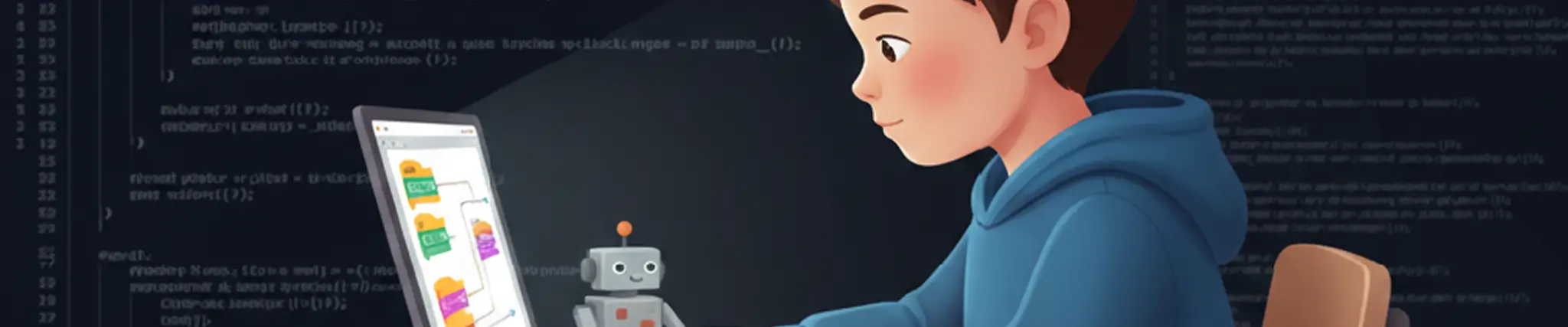
Coding/ Programming is the future of work.
Learning how to program is different from traditional academic subjects. Over 100+ students have successfully completed our
Scratch programming course
.
Introduction: From Traditional Classrooms to Student-Centred Learning
In traditional classrooms, students sit quietly in their assigned seats while the teacher speaks and delivers information. It is often assumed that students will absorb knowledge like a sponge.
Such teacher-centred practices are common in middle and high schools, and students frequently find them boring and dull.
However, education is shifting toward a more student-centred approach.
This means lessons are no longer one-sided. Instead, they involve:
- Collaboration
- Discussion
- Exploration of ideas
- Hands-on experiences
If a teacher wants students to learn effectively, communicate clearly, and think creatively and critically, this shift in teaching methodology becomes essential.
This is the model used by TutorBees tutors when helping children learn to code.
TutorBees has a strong team of trained and proficient teachers who deliver one-to-one, student-centred classes. Even though classes are online, students do not find them boring or dull. Tutors work intentionally to keep lessons interactive, engaging, and effective.
Programming classes at TutorBees are becoming increasingly in demand because of how they are taught.
Self-Discovery, Creativity, and Encouragement
Student-centred classes encourage students to figure answers out themselves rather than relying entirely on the teacher.
While it may be easier to simply explain everything, it is not always the best way to help students grow.
TutorBees focuses on self-discovery as a core part of learning programming. Tutors prompt and guide students instead of immediately giving solutions.
How TutorBees Classes Differ
In many traditional classrooms:
- A topic is introduced
- Worksheets are completed
- A quiz follows
At TutorBees:
- A topic is introduced
- Students explore through hands-on programming tasks
- Activities encourage creative and critical thinking
- Tutors guide only when necessary
After completing tasks, students share their ideas and answer questions related to the lesson. Discussions help connect all parts of the topic together.
“Teaching is telling; told isn’t taught.”
Programming classes involve not only visual learning but also interactive learning.
Why Creativity Matters in Programming
Programming is not only about maths and problem-solving. It also involves creating and bringing ideas to life — games, tools, and digital projects.
Young students are naturally curious and creative. Because of this, programming can become as enjoyable as painting or building with Legos.
TutorBees captures students’ interest and channels their creativity into structured learning. Encouragement keeps classes enjoyable and motivating.
Different programmers enjoy solving different types of problems. With this in mind, TutorBees tutors:
- Encourage curiosity
- Promote problem-solving
- Challenge students to solve puzzles in multiple ways
A student who enjoys solving puzzles will eventually find programming fascinating, even if they were not interested at the beginning.
This is why encouragement and fun learning are essential parts of
TutorBees’ Scratch Classes
for kids.
The Role of a Tutor in a 1-to-1 Student-Centred Model
In a student-centred classroom, the teacher’s role evolves.
1. Teacher as a Resource
Teachers provide knowledge and ideas, while students take responsibility for using that resource effectively.
In TutorBees classes, students lead communication by expressing what they understand and what they need help with. This builds the important skill of self-advocacy.
2. Teacher as a Mentor
TutorBees recognizes that the student-teacher relationship is crucial for learning.
Teachers are not only instructors but trusted mentors who provide:
- Confidence
- Motivation
- Leadership guidance
Tutors are trained to be trustworthy and warm teachers that students feel comfortable with.
3. Teacher as a Guide
TutorBees teachers provide structure and direction so students can:
- Overcome academic challenges
- Connect lessons to personal interests
- Build long-term goals
They guide students both inside and outside the classroom experience.
Who Can Join the Scratch Course?
The course is designed for children aged 6 to 12 years.
Course Duration: 6 weeks