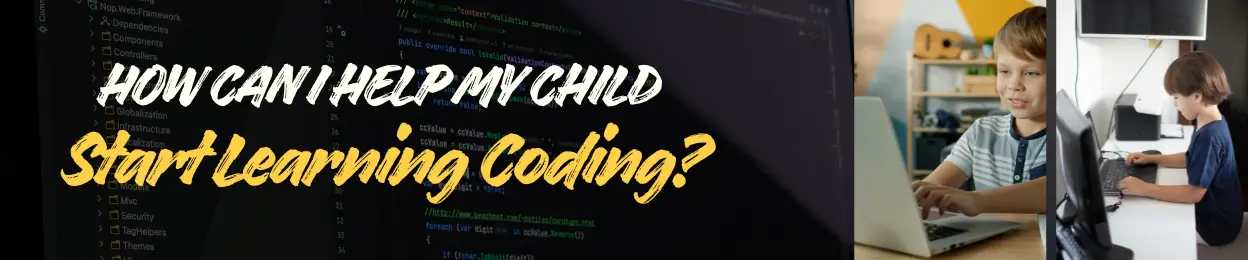
You might be wondering… how do I even start teaching my child coding?
And honestly, that’s a very common question these days.
A lot of parents feel that coding is something too technical or complicated — something only older students or professionals should deal with. But if you look around, kids today are already quite comfortable with technology. They use phones, apps, and games almost naturally.
So introducing coding isn’t really about throwing difficult concepts at them. It’s more about guiding that curiosity in the right direction.
So, where should you begin?
You don’t need to be a programmer. That’s the first thing.
Start small and keep it simple:
- Let your child explore, don’t rush
- Choose tools that feel more like games than lessons
- Keep sessions short so they don’t lose interest
- Help only when they ask (this part is important)
In the beginning, the goal is not “learning coding properly”.
It’s just getting them comfortable with the idea.
What is coding?
At its core, coding is just a way of telling a computer what to do.
That’s it.
Every time:
- a game runs
- a website loads
- an app opens
there’s some code working behind the scenes.
People often think computers are “smart”, but they’re really just following instructions.
Coding is what gives those instructions.
Do parents need to learn coding too?
Not fully. But knowing a few basic ideas helps.
You don’t have to go deep into theory. Just a rough understanding is enough to support your child when they get stuck.
Here are a few simple concepts:
Variables
You can think of them like small boxes that store information.
Loops
These are used when you want something to repeat again and again.
Training
This usually comes up in AI, it just means giving data so a system can improve.
That’s honestly enough at the start.
Which coding language should kids start with?
This part confuses a lot of parents, but the answer is:
it depends on the child — not the language.
Still, here are some common options:
JavaScript
Used in websites and games. Very common and useful later on.
Python
Probably the easiest language for beginners.
Simple to read and widely used.
If your child wants to go a bit further, guided help can really speed things up.
You can register for Python here.
HTML
A good starting point for understanding how websites are built.
Not exactly a full programming language, but still useful.
You can get started with HTML here.
Platforms that actually make coding fun
This is where things get interesting. Kids learn much better when coding feels like play.
Blockly Games
This uses blocks instead of typing code.
- Good for beginners
- Feels like solving puzzles
- Easy for parents to follow too
Even if you don’t know coding, you can sit with your child and figure things out together.
Scratch
Scratch is one of the most popular platforms for kids (especially younger ones).
- Drag-and-drop coding
- Kids can make games and animations
- They see results instantly, which keeps them interested
We’ve seen many kids start with Scratch and build small projects within weeks.
You can check how it works here:
https://www.youtube.com/watch?v=xIYlug5A-Hk
If you’d like your child to try Scratch, you can register here.
One important tip (most parents miss this)
It’s very tempting to step in and “fix things” for your child.
Try not to.
Let them:
- take their time
- make mistakes
- try again
Even if they’re slow — that’s fine.
In fact, that’s where real learning happens.
Just guide them when they ask. Don’t take over.
When things start getting difficult…
At some point, your child might:
- get stuck
- lose interest
- start asking questions you’re not sure about
That’s completely normal.
This is usually where some structured help makes a difference.
A tutor or guided program can:
- keep them consistent
- explain concepts clearly
- make learning more engaging
Want to get started with proper guidance?
If you feel your child would do better with a bit of structure, you can explore beginner-friendly coding classes below:
Final thought
You don’t need to have everything figured out before starting.
Just begin.
Keep it simple, keep it light, and most importantly, keep it fun.
The rest usually falls into place over time.