
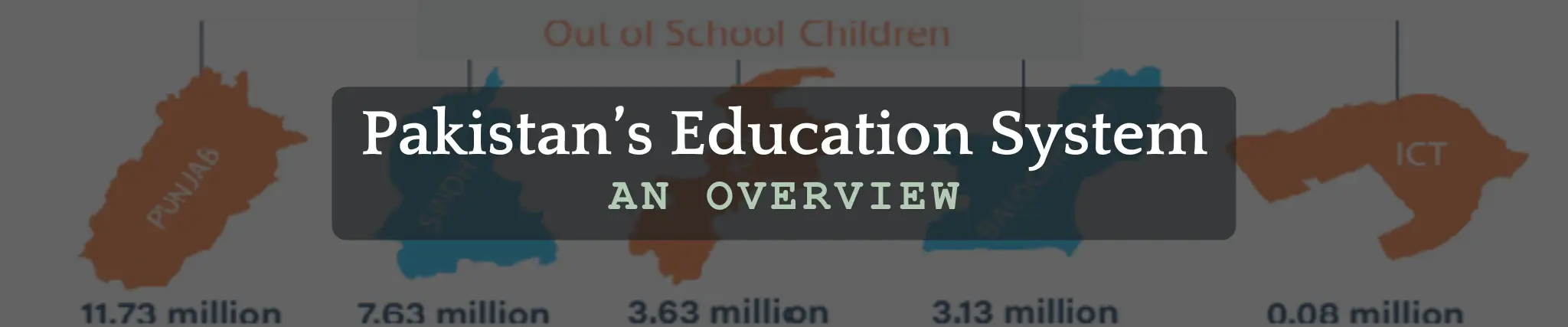

Pakistan’s education system plays a crucial role in the country’s growth and development. It shapes the future of young people and contributes to progress across various sectors. This article explores the key components of Pakistan’s education system, including its policies, curriculum, teacher training, and the impact of digital learning platforms on modern education.
Pakistan’s education system consists of a diverse network of institutions, including primary and secondary schools, colleges, universities, and vocational training centers. The system continues to evolve as policymakers and educational stakeholders work toward improving accessibility, quality, and equity for students across the country.
One major focus is the improvement of educational policies. These policies aim to address challenges such as low literacy rates, unequal access to education, inefficient resource utilization, and the integration of modern technologies into classrooms. Through these reforms, Pakistan hopes to build an education system that contributes meaningfully to national development and prosperity.
Key Takeaways
- Pakistan’s education system is a major contributor to national growth and youth development.
- The education system includes schools, colleges, universities, and vocational institutes.
- Educational policies focus on improving access, quality, and equality in education.
- Technological advancements and digital learning are reshaping the educational landscape.
- Challenges such as infrastructure and resource allocation are gradually being addressed through reforms and initiatives.
Introduction
Pakistan’s education system is complex and deeply influenced by the country’s history, population diversity, and ongoing efforts to improve educational access and equality. From urban cities to remote rural areas, the education sector includes a wide range of institutions, policies, and challenges that directly affect national progress.
Overview of Pakistan’s Educational Landscape
Pakistan’s educational structure includes both public and private institutions that serve students from early childhood education to higher studies.
Public schools, funded mainly by the government, aim to provide free education up to the secondary level. However, they often face significant challenges such as overcrowded classrooms, outdated curricula, and shortages of qualified teachers.
Private schools, on the other hand, have experienced substantial growth in recent years. These schools range from affordable community institutions to prestigious international schools. While many private institutions provide higher-quality education, they also contribute to educational inequality because of affordability differences.
Importance of Education for National Development
Education is one of the strongest pillars of national development. It helps individuals improve their lives while also contributing to the country’s economic, social, and political progress.
Equal access to quality education is essential for developing a skilled workforce capable of driving Pakistan’s economy forward. Education also promotes civic awareness, critical thinking, and social harmony, all of which are vital for long-term national stability and development.
Despite progress, Pakistan still faces challenges in ensuring equal educational opportunities for everyone. Therefore, strengthening the education sector remains a major priority for policymakers and stakeholders.
“Education is the most powerful weapon which you can use to change the world.” — Nelson Mandela
Pakistan’s Educational Policies
The government of Pakistan has introduced numerous educational policies and reforms to address challenges within the education system. These initiatives primarily focus on curriculum development, teacher training, educational accessibility, and improvements in overall learning standards.
One of the most significant initiatives is the National Education Policy, which serves as a framework for educational development across the country. It provides direction regarding curriculum design, teaching methodologies, and school infrastructure improvements.
The government has also emphasized teacher training programs to improve classroom effectiveness and learning outcomes.
Key policy focus areas include:
- Strengthening curriculum development according to global and local needs
- Investing in teacher training and professional development
- Improving access to education in underserved and rural areas
- Promoting technology integration in classrooms
- Collaborating with private institutions and international organizations
These reforms aim to create a more inclusive and equitable education system that supports both individual growth and national development.
| Policy Initiative | Key Focus Areas | Impact |
|---|---|---|
| National Education Policy | Curriculum development, teaching methods, and educational infrastructure | Provides a comprehensive framework for the education sector |
| Teacher Training Programs | Enhancing pedagogical skills, subject knowledge, and professional development | Equips educators with modern teaching competencies |
| Technological Integration | Digital literacy, classroom technology, and online educational resources | Promotes digital inclusion and improves the learning experience |
The implementation of these policies is an ongoing process. The government continues to review and improve its strategies to meet the changing educational needs of Pakistan.
By prioritizing educational reforms, curriculum advancement, and teacher development, Pakistan is taking meaningful steps toward creating a stronger and more effective education system for future generations.
Curriculum Development and Implementation
Curriculum development and implementation are central components of Pakistan’s education system. The National Curriculum Framework guides this process by establishing learning goals, educational standards, and curriculum guidelines across the country.
National Curriculum Framework
The National Curriculum Framework serves as the foundation for curriculum development in Pakistan. It ensures that educational content aligns with national goals, social values, and international educational standards.
The framework is regularly updated to keep pace with changing educational trends and societal needs.
Textbook Development and Review Process
Textbook development is another important aspect of curriculum implementation. Textbooks remain the primary learning tools for students, making their quality and relevance highly important.
Teachers, subject specialists, and policymakers collaborate to ensure textbooks are accurate, engaging, and aligned with curriculum objectives.
Regular textbook reviews help eliminate outdated information, improve clarity, and maintain educational quality. Feedback from teachers and students also contributes to refining the learning materials.
Through these efforts, Pakistan continues working toward improving curriculum effectiveness and student assessment standards.
Teacher Training and Professional Development
Teachers play a vital role in shaping the future of students and the education system itself. Recognizing this importance, both government institutions and private organizations in Pakistan are investing in teacher training and professional development initiatives.
Teacher training programs focus on improving:
- Subject expertise
- Classroom management skills
- Teaching methodologies
- Student engagement strategies
- Use of modern educational technologies
Continuous professional development through workshops, seminars, mentorship programs, and online learning platforms helps teachers remain updated with modern educational practices.
Teachers also benefit from collaborative learning environments where they can exchange ideas, share experiences, and adopt effective teaching strategies.
By prioritizing teacher development, Pakistan aims to build a more skilled and dedicated teaching workforce capable of improving educational quality nationwide.
School Infrastructure and Facilities
Quality school infrastructure is essential for creating a productive learning environment. However, Pakistan continues to face serious infrastructure-related challenges that affect student learning outcomes.
Challenges in Providing Adequate Infrastructure
Many schools across Pakistan lack basic facilities such as proper classrooms, ventilation, electricity, clean drinking water, and sanitation systems. These issues significantly affect students’ ability to learn comfortably and effectively.
Additionally, the shortage of laboratories, libraries, sports grounds, and recreational facilities limits opportunities for practical learning and extracurricular development.
These problems are particularly severe in rural and underprivileged areas.
Initiatives for Improving School Facilities
To address these challenges, the government and various organizations have launched several initiatives aimed at improving school infrastructure.
These initiatives include:
- Constructing new schools and renovating existing ones
- Introducing digital learning tools and internet access
- Developing science labs, libraries, and sports facilities
- Improving water and sanitation systems in schools
Although progress has been made, substantial investment and long-term planning are still needed to fully improve educational infrastructure across Pakistan.
“Investing in quality school infrastructure is not just about building classrooms; it’s about creating an environment that fosters intellectual, physical, and social growth.”
Digital Learning and Educational Technology
Digital learning and educational technology are becoming increasingly important in Pakistan’s education system.
Schools are now incorporating tools such as interactive whiteboards, tablets, digital simulations, and online learning platforms to make lessons more engaging and accessible.
Online educational resources allow students to learn independently and at their own pace. E-learning platforms, video lectures, and digital libraries have also expanded educational opportunities for students in remote areas.
| Key Initiatives in Digital Learning | Impact on Education |
|---|---|
| Interactive whiteboards and tablets in classrooms | Enhanced student engagement and collaborative learning |
| Expansion of online educational resources and e-learning platforms | Greater access to personalized learning opportunities |
| Educational apps and digital simulations | Improved understanding of complex concepts |
Pakistan’s growing focus on digital learning is expected to transform the educational experience and prepare students for the demands of the modern digital world.
Challenges and Opportunities in Pakistan’s Education System
Pakistan’s education system faces several ongoing challenges, including unequal access to education, quality concerns, and limited resources in rural areas.
The literacy rate remains relatively low, with significant disparities between urban and rural populations and between men and women.
Higher education institutions also face challenges such as outdated curricula, limited research opportunities, and inadequate funding.
However, there are also many opportunities for improvement and innovation. Efforts are being made to:
- Expand educational access through new schools and universities
- Promote digital learning initiatives
- Improve teacher training programs
- Modernize curricula
- Strengthen collaboration between educational institutions and industries
These initiatives have the potential to significantly improve Pakistan’s educational future.
FAQ
What is the current state of Pakistan’s education system?
Pakistan’s education system continues to face challenges related to accessibility, infrastructure, and educational quality. Although efforts are being made to improve the sector, population growth and resource limitations continue to affect progress.
What are the key educational policies and reforms in Pakistan?
Pakistan has introduced several educational reforms, including the National Education Policy, which focuses on curriculum development, teacher training, and school improvement initiatives.
How is the curriculum developed and implemented in Pakistan?
The National Curriculum Framework sets educational goals and standards, while textbooks and learning materials are developed collaboratively to ensure quality and relevance.
What efforts are being made to train and develop teachers in Pakistan?
Teacher training programs, certifications, workshops, and online professional development initiatives are helping educators improve their teaching methods and subject knowledge.
How is the government addressing school infrastructure issues?
The government is working to improve classrooms, provide digital learning facilities, and upgrade school infrastructure through various development projects.
What is the role of digital learning and educational technology in Pakistan’s education system?
Digital learning tools are helping make education more accessible, interactive, and flexible while preparing students for the digital future.
What are the key challenges and opportunities in Pakistan’s education system?
Major challenges include limited access, low literacy rates, and outdated infrastructure. However, technological innovation, curriculum reforms, and skill-based education present significant opportunities for improvement.
References
PAKISTAN EDUCATION STATISTICS 2021-22