
A student reads the word “decision” in their English textbook. The teacher gives the Urdu meaning, the class writes it down, and the lesson moves on. The word has been translated, but has it been understood?
That question shaped our Beyond Translation workshop, held on 24 October 2026 for English and Urdu teachers as part of the TutorBees Skill Exchange programme. The idea was simple: words are not merely words. They carry meaning, beliefs and actions.
Why translation is not enough
A sentence like “I respect everyone at home” appears in a Grade 3 textbook and is usually read aloud and forgotten. Yet the word respect holds a whole lesson about listening and accepting other points of view.
Teachers at the workshop agreed on two things:
- Children copy what we do: A shy student who is invited from the back row to the front learns their worth through the teacher’s actions, not words.
- Questions shape thinking: A child who is asked “What do you think?” will actually think.
A word grows with the learner
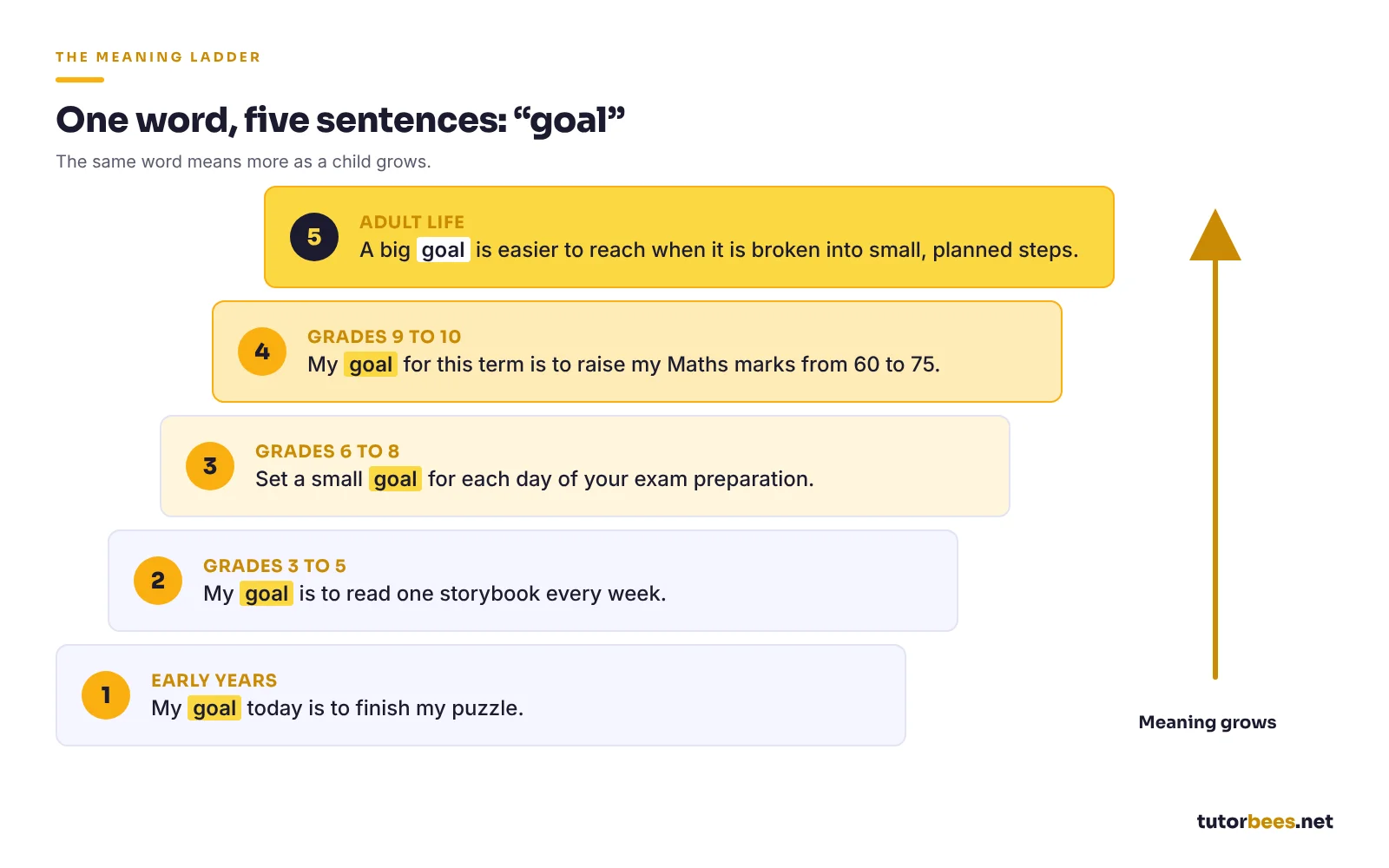
The same word means more as a child grows. Our workshop pack shows this with a meaning ladder, five sentences for one word. Here it is for “goal”:
- Early years: My goal today is to finish my puzzle.
- Grades 3 to 5: My goal is to read one storybook every week.
- Grades 6 to 8: Set a small goal for each day of your exam preparation.
- Grades 9 to 10: My goal for this term is to raise my Maths marks from 60 to 75.
- Adult life: A big goal is easier to reach when it is broken into small, planned steps.
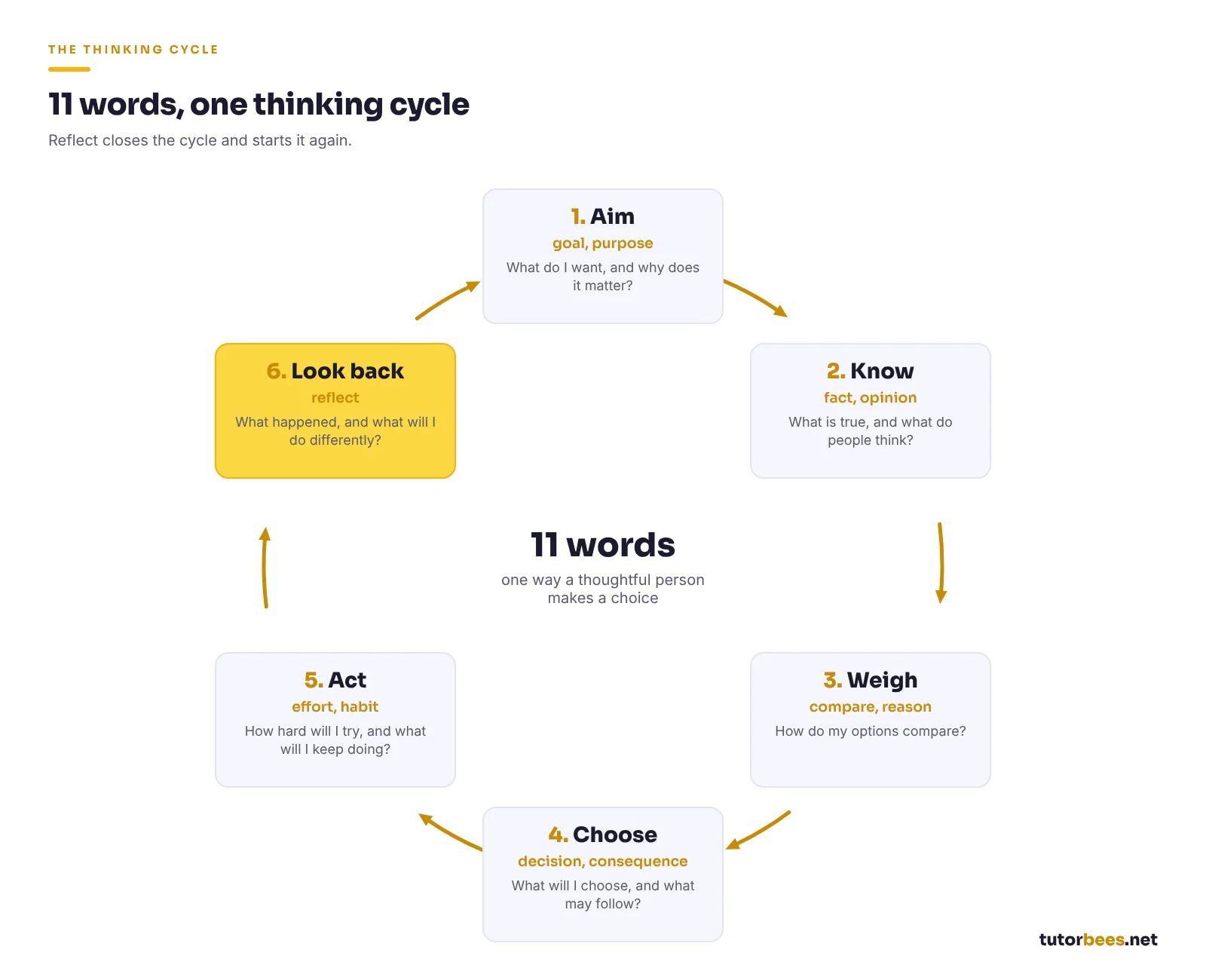
11 words, one thinking cycle
We chose 11 words from Punjab English textbooks. Paired up, they follow one way a thoughtful person makes a choice:
| Step | Words | What it asks |
|---|---|---|
| 1. Aim | goal, purpose | What do I want, and why does it matter? |
| 2. Know | fact, opinion | What is true, and what do people think? |
| 3. Weigh | compare, reason | How do my options compare, and why do I prefer one? |
| 4. Choose | decision, consequence | What will I choose, and what may follow? |
| 5. Act | effort, habit | How hard will I try, and what will I keep doing? |
| 6. Look back | reflect | What happened, and what will I do differently? |
Reflect closes the cycle and starts it again. Adults need these words too, because we often jump to conclusions or decide without hearing others.
Try it with a story
In the workshop, teachers read “Zara and the Thirsty Birds”, a story about a Grade 4 student preparing for her science fair. They stopped at each highlighted word and defined it in their own words. You can do the same with any story:
- Read aloud and pause at each key word.
- Ask, “What does it mean here?”
- Let students explain it before you add to it.
- Connect the word to their own lives.
Parents can do this at home too. Take one pair of words every two days, and you will cover the whole cycle in under two weeks.
Suggested read: Aqeeda & Shaoor: The 10-Second Pause Before You Speak

Final thoughts
Teaching meaning does not need a new syllabus. It needs a teacher who stops at the right word and asks the right question.
Do you believe in teaching beyond the textbook? Join TutorBees.net and become part of a community of teachers who share what works.